
When Should Peptides Be Refrigerated?
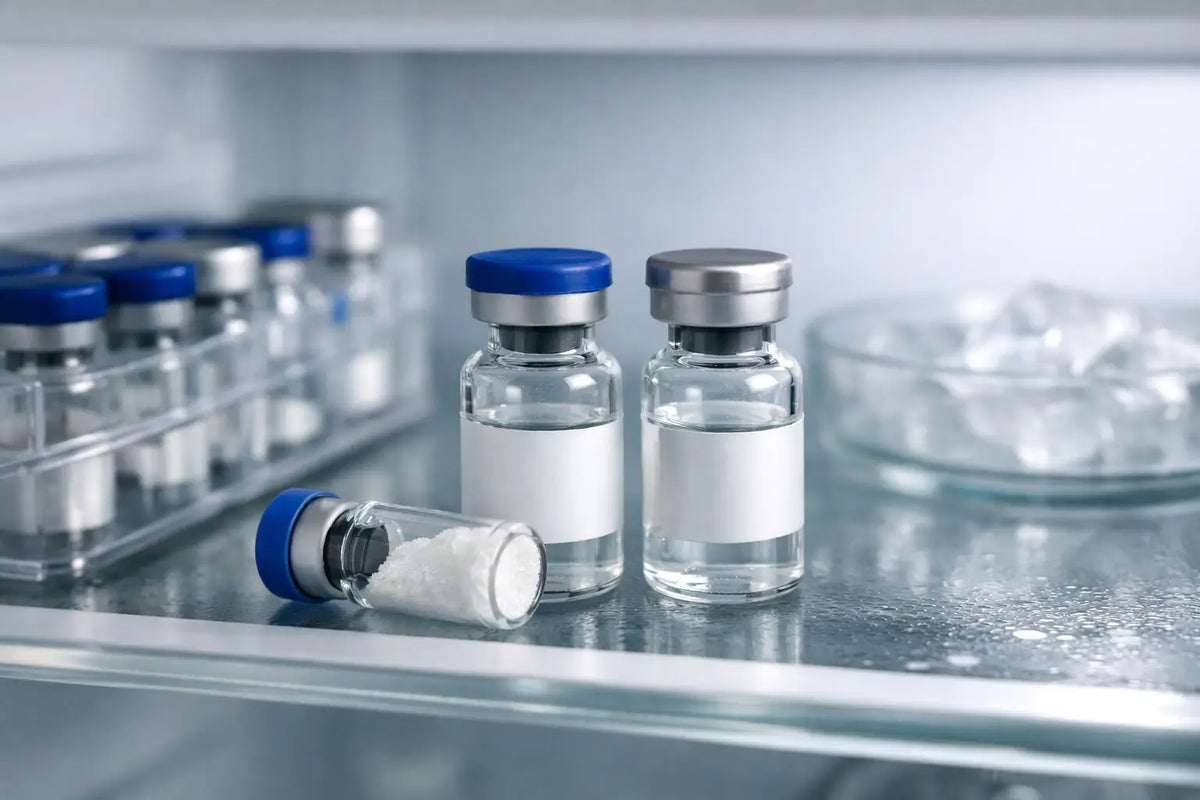
A peptide that arrives in excellent condition can still become unreliable if it is stored badly for even a short period. That is why one of the most common handling questions is when should peptides be refrigerated. The answer depends on the peptide format, the expected storage period, and whether the vial is still lyophilised or has already been reconstituted.
For research buyers, storage is not a minor afterthought. It affects stability, handling consistency, and the confidence you can have in your material over time. Refrigeration is often appropriate, but not always in the same way and not always at the same stage.
When should peptides be refrigerated in practice?
In practice, peptides should be refrigerated when the manufacturer or supplier's storage guidance calls for cold storage, particularly after reconstitution. For many research peptides, the clearest distinction is between lyophilised powder and liquid solution.
A lyophilised peptide is generally more stable than a reconstituted one. In many cases, short-term storage of the unopened lyophilised vial at cool room temperature may be tolerated during transit or brief handling windows, but that does not mean room temperature is the preferred condition for ongoing storage. If the material will not be used immediately, refrigeration is commonly recommended to help preserve integrity.
Once a peptide has been reconstituted with bacteriostatic water or another suitable solvent, refrigeration becomes much more important. In solution, peptides are typically more vulnerable to degradation, contamination risk, and loss of consistency over time. For that reason, reconstituted peptides are usually stored at 2-8°C unless the product-specific guidance states otherwise.
Lyophilised vs reconstituted peptides
Lyophilised peptides
Lyophilised peptides are freeze-dried to improve stability during shipping and storage. This format removes water, which helps reduce many degradation pathways. That is why a powder vial often has more flexibility than a liquid vial.
Even so, flexibility should not be confused with permanence. A lyophilised peptide stored in a warm room, exposed to repeated humidity changes, or left in bright light may degrade faster than expected. If you are holding stock for more than a brief period, refrigeration is normally the safer choice. For longer-term storage, some research settings use freezing conditions, but that should follow peptide-specific handling guidance rather than a blanket rule.
Reconstituted peptides
After reconstitution, stability usually drops and handling discipline matters more. Water introduces the possibility of hydrolysis and supports conditions in which contamination becomes more relevant if technique is poor. Refrigeration slows these processes, which is why it is standard practice for many reconstituted research peptides.
This is also where avoidable mistakes tend to happen. A vial may be reconstituted correctly, then left on a bench for hours, exposed to temperature cycling, or returned to storage after repeated unnecessary warming. None of that helps preserve the material. Once mixed, peptides should generally be kept refrigerated between uses and handled efficiently.
Why refrigeration matters
Refrigeration is not about making a peptide stronger. It is about slowing the factors that can reduce quality. Lower temperatures can help limit chemical breakdown and reduce the pace of changes that affect analytical reliability.
That matters more for some compounds than others. Peptides vary in sequence, structure, and sensitivity. Some tolerate handling better than expected, while others are less forgiving. The point is not that every vial instantly degrades outside the fridge. The point is that controlled storage gives you better odds of maintaining the condition you paid for.
For serious buyers, this ties directly to quality assurance. High purity at dispatch is only one part of the equation. Proper storage after delivery is what helps preserve that standard within your own workflow.
Situations where refrigeration is usually needed
If a peptide has been reconstituted, refrigeration is usually the default unless documented guidance says otherwise. The same applies if you plan to store a lyophilised vial for more than a short period after receipt.
Refrigeration is also sensible when ambient temperatures are high. A cool room in winter is not the same as a warm workspace in summer, and storage decisions should reflect real conditions rather than assumptions. If room temperature is fluctuating above typical controlled indoor levels, cold storage becomes more important.
Another common case is multi-vial purchasing. If you order several vials for staged research use, refrigeration helps protect unused stock while you work through the first vial. The same logic applies to labs and repeat buyers who hold inventory rather than using everything immediately.
When room temperature may be acceptable
Short answer - sometimes, but only in limited circumstances.
A sealed lyophilised peptide may tolerate a short period at room temperature during shipping, receiving, or immediate preparation, particularly if conditions remain dry, dark, and reasonably cool. That does not mean it should sit in a drawer for weeks. Short exposure is very different from casual storage.
If you have just received a parcel and are checking documentation, inspecting vials, or organising stock, a brief room-temperature window is not usually the issue. Prolonged storage is. The longer the timeline, the stronger the case for refrigeration or freezing, depending on the product guidance.
Storage risks that matter more than buyers think
Temperature is only one variable. Moisture, light exposure, and repeated temperature changes can all work against peptide stability.
Condensation is a common problem. Taking a cold vial out of the fridge and opening it before it reaches equilibrium can introduce moisture. That is particularly relevant for lyophilised peptides, because moisture undermines one of the main reasons they remain relatively stable in powder form.
Repeated freeze-thaw cycles can also be damaging for some peptides in solution. If a lab expects repeated access over time, aliquoting may be a better choice than repeatedly warming and cooling the same vial. That approach is not necessary in every setting, but where precision matters, it is often the cleaner handling method.
Light exposure is another avoidable variable. Even if refrigeration is correct, leaving vials under bright light or on an open bench adds unnecessary stress. Good storage means cool, dark, dry, and consistent.
Practical handling standards for research buyers
A sensible approach starts before the vial is opened. On receipt, inspect the product, confirm the label and batch details, and review the storage guidance supplied for that compound. Then move the peptide to the appropriate storage condition without delay.
For lyophilised stock, keep the vial sealed until needed and limit unnecessary handling. For reconstituted stock, use clean technique, refrigerate promptly after preparation, and avoid leaving the solution out longer than necessary during use.
Documentation matters as well. If you are managing multiple compounds or batch numbers, record reconstitution dates and storage conditions. That is basic lab discipline, but it is also the easiest way to avoid uncertainty later.
At ApexLink Peptides, this is exactly why buyers place value on clear handling guidance alongside HPLC-verified purity and batch documentation. Product quality starts with manufacturing standards, but it is protected by storage discipline afterwards.
The answer depends on the peptide
The most accurate answer to when should peptides be refrigerated is this: refrigerate them whenever the product format, storage duration, or supplier guidance indicates that cold storage is needed, and treat reconstituted peptides as requiring far stricter temperature control than lyophilised ones.
That answer is less tidy than a one-size-fits-all rule, but it is more useful. Different peptides have different stability profiles. Different labs have different ambient conditions. Different purchasing patterns create different storage timelines.
What does stay consistent is the principle behind good handling. If you want to preserve research-grade material properly, do not rely on guesswork, convenience, or broad internet advice. Use the compound-specific guidance, store for the format you actually have in front of you, and keep conditions stable from delivery through use.
Cold storage is not complicated, but it does reward precision. A few careful decisions at the start can save a great deal of uncertainty later.
More from the research library.
How to Select Peptide Vial Sizes for Research
Learn how to select peptide vial sizes for research based on assay demand, reconstitution volume, stab...
Read article →
How to Calculate Peptide Molarity Correctly
Learn how to calculate peptide molarity from mass, molecular weight and reconstitution volume, with pr...
Read article →
Can Researchers Verify Peptide Identity Reliably?
Can researchers verify peptide identity? Learn how HPLC, mass spectrometry, batch records and Certific...
Read article →