
Stability preservation
Peptides can be sensitive to heat, moisture, oxidation and light. Controlled storage conditions help minimise degradation and preserve molecular integrity.
You must be at least 18 years old to enter this website. Please confirm your age to continue.
By entering, you confirm that you meet the minimum age requirement.
You cannot enter ApexLink Peptides because you indicated that you are under 18.
Leave siteResearch peptides are sensitive compounds. Controlled temperature, moisture, light exposure and handling practices help maintain structural integrity and analytical reliability.

Correct storage conditions play a critical role in maintaining peptide quality and consistency during laboratory research.
Peptides can be sensitive to heat, moisture, oxidation and light. Controlled storage conditions help minimise degradation and preserve molecular integrity.
Maintaining stable peptide conditions supports reproducibility and consistency across analytical and laboratory workflows.
Improper handling or unsuitable storage environments may contribute to instability, aggregation or reduced analytical reliability.
Storage requirements change after reconstitution, so material state should guide temperature and handling controls.
Lyophilised peptides generally demonstrate improved stability when stored under controlled low-temperature conditions.
Repeated freeze-thaw exposure should be minimised where possible, as temperature fluctuations may affect peptide stability.
Following reconstitution, peptides may become more susceptible to hydrolysis, oxidation and environmental degradation.
Selection of an appropriate research-grade solvent should be based on peptide characteristics, solubility profiles and laboratory protocol requirements.
Controlled handling helps reduce contamination risk and supports consistent sample condition throughout preparation and analytical workflows.
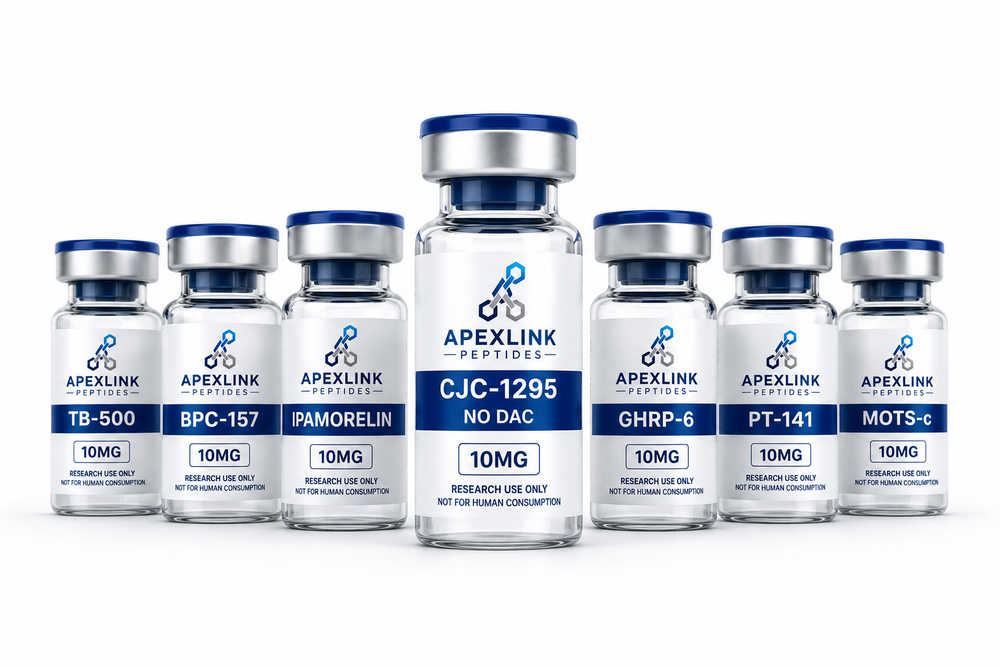
Controlled laboratory handling procedures are recommended to help reduce contamination risk and maintain sample integrity.
Excessive agitation may contribute to peptide instability in certain compounds. Gentle handling methods are generally preferred during preparation procedures.
Plan handling steps in advance so materials spend less unnecessary time exposed to ambient temperature, humidity and light.

Line total