
What Does 99 Purity Mean in Peptides?
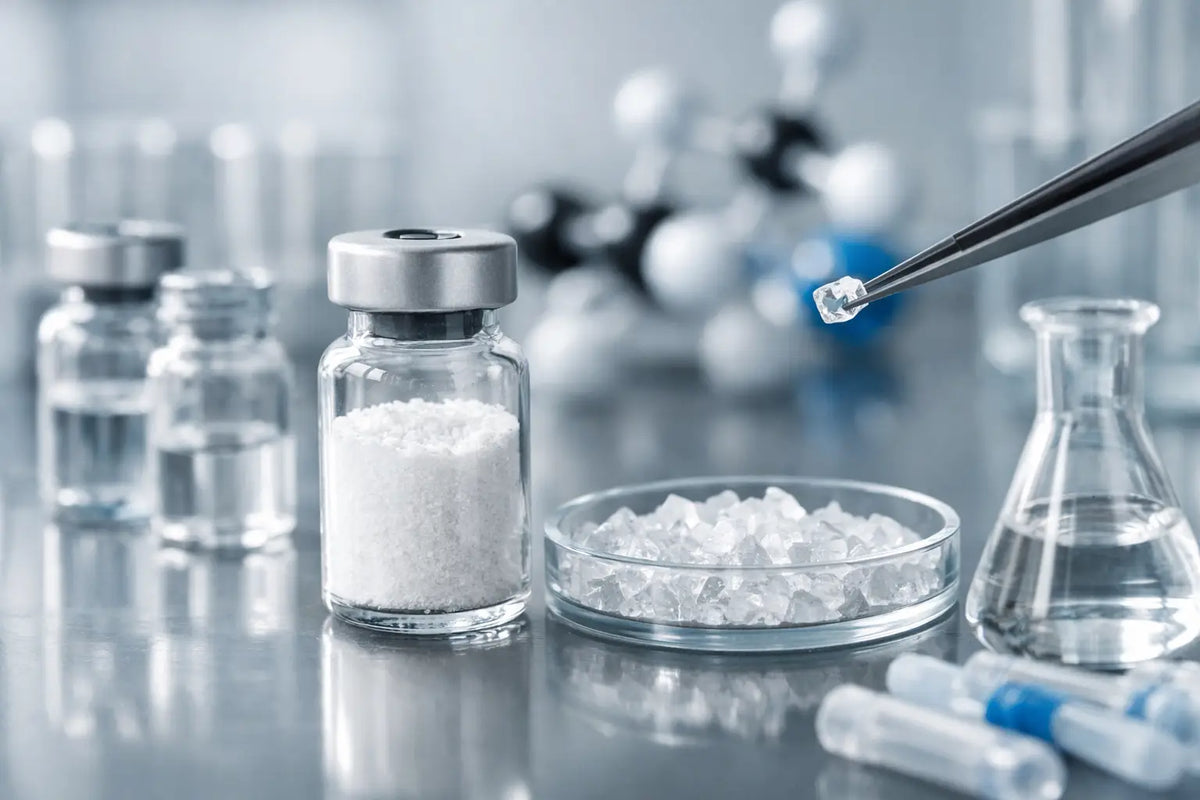
If you are comparing peptide suppliers, the phrase what does 99 purity mean peptides usually comes up quickly. It sounds straightforward, but in practice it raises a more useful question: what exactly is being measured, by which method, and how much confidence should that number give you when you are buying for research use?
For serious buyers, purity is not a marketing extra. It affects batch consistency, interpretability of results, and confidence in handling and reconstitution. A peptide listed at 99% purity is generally a strong specification, but the number only means something when it is supported by proper analytical testing and batch-level documentation.
What does 99 purity mean in peptides?
In practical terms, 99% purity means that the analysed sample consists of 99% of the target peptide and around 1% of other detectable components, based on the test method used. In peptide supply, that figure is most commonly established by HPLC, or High-Performance Liquid Chromatography.
HPLC separates compounds within a sample and estimates how much of the total material corresponds to the main peptide peak. If a chromatogram shows that the principal peak accounts for 99% of the total detected area, the batch may be described as 99% pure by HPLC.
That is the core answer, but there is an important qualification. Purity is not a single universal fact independent of method. It is an analytical result generated under defined conditions. A 99% HPLC purity result tells you the sample performed to that level in that test, not that every possible impurity in every possible context has been eliminated.
Why 99% purity matters to research buyers
For laboratory and investigational use, high purity supports cleaner experimental conditions. The closer the sample is to the intended peptide sequence, the lower the probability that side products, truncated sequences, synthesis residues, or degradation products will affect outcomes.
This matters when you are trying to reproduce results across batches or compare data between projects. A lower-purity peptide can introduce uncertainty that has nothing to do with the experimental design itself. If an unexpected result appears, the first question often becomes whether the compound was consistent, rather than whether the hypothesis was sound.
That is why experienced buyers do not stop at the product label. They look for purity verification, batch traceability, and a Certificate of Analysis. Without those, a purity claim is just a line of copy.
What the missing 1% can include
The remaining 1% is not automatically dangerous, but it is not meaningless either. In peptide manufacturing, that fraction may contain closely related impurities such as truncated peptides, deletion sequences, oxidised material, synthesis by-products, residual reagents, or small degradation products formed during processing or storage.
Some impurities are structurally similar to the target peptide and may be difficult to separate completely. Others may be present in very low amounts but still matter in sensitive analytical work. Whether that 1% is significant depends on the peptide, the research setting, the detection method, and the level of precision required.
This is where buyers need to avoid simplistic thinking. A 99% figure is high, but it is still only one part of the quality picture. Purity does not replace identity testing, proper storage, or careful handling.
How HPLC purity should be understood
HPLC is widely used because it is practical, established, and effective for assessing peptide purity. It gives researchers a clear view of the main peak and visible impurity profile under specified conditions. For most buyers, it is the standard reference point when reviewing product quality.
Even so, HPLC has limits. It does not answer every analytical question on its own. Certain impurities may co-elute, meaning they appear under the same or overlapping peak conditions. The result can also vary depending on the column, solvent system, wavelength, and run method used.
That does not make HPLC unreliable. It means the result should be read correctly. A supplier advertising minimum 99% purity verified by HPLC and providing a Certificate of Analysis is offering a meaningful quality benchmark. A supplier simply stating 99% purity without supporting data is asking you to take the claim on trust.
Why a Certificate of Analysis matters
A Certificate of Analysis turns a headline claim into a documented batch record. It should identify the product, batch or lot reference, test method, and analytical result. Depending on the supplier, it may also include mass spectrometry confirmation, appearance, and date of testing.
For research buyers, the value is obvious. Documentation supports batch-to-batch comparison, internal record keeping, and purchasing decisions. It also gives you something concrete to review before a compound enters your workflow.
If a supplier cannot provide a current Certificate of Analysis, the purity figure becomes much less useful. In a category where inconsistent sourcing is a common problem, documentation is part of the product, not an optional extra.
99% purity does not mean 99% potency
One of the more common misunderstandings is treating purity and potency as interchangeable. They are not the same. Purity refers to how much of the analysed material is the intended compound relative to detectable impurities. Potency refers more broadly to the biological or functional effect of the compound in use.
A peptide can test at high purity and still be compromised by poor storage, repeated temperature exposure, reconstitution errors, or degradation after opening. Equally, a batch with acceptable purity but weak handling controls may not perform as expected in a research setting.
This is why quality-minded buyers assess the whole chain: manufacturing standard, analytical verification, packaging, dispatch speed, storage guidance, and technical support.
What to check beyond the purity percentage
When reviewing a peptide supplier, the number itself should be the start of the assessment rather than the end. You should also consider whether the peptide is tested batch by batch, whether HPLC data is available, whether identity is confirmed, and whether fulfilment practices protect product integrity in transit.
The supplier’s overall transparency also matters. Clear research-use positioning, straightforward specification language, and responsive support are strong signs that the business understands the expectations of laboratory and investigational buyers.
For that reason, many experienced purchasers prefer suppliers that present a minimum purity standard across their catalogue and back it with HPLC verification and Certificates of Analysis. At ApexLink Peptides, that emphasis exists because repeat buyers need consistency, not broad claims.
When 99% purity is enough, and when more scrutiny is needed
For most research applications, 99% purity is a strong and commercially relevant standard. It indicates a highly refined product and will meet the expectations of many buyers sourcing laboratory-grade peptides.
Still, context matters. Some applications are more sensitive to low-level impurities than others. If your work depends on extremely tight analytical control, you may need to examine the chromatogram itself, review supporting test data, or ask further questions about impurity profiling.
There is no contradiction here. A 99% purity result is high, but intelligent procurement always matches the specification to the intended use. The best buyers are not impressed by a number alone. They want to know how that number was produced and whether the supplier can stand behind it.
The practical answer buyers should take away
So, what does 99 purity mean peptides? It means the sample has been analysed and found to contain 99% of the target peptide according to the stated method, usually HPLC, with the remaining fraction made up of other detectable components. That is a meaningful quality indicator, especially when supported by a Certificate of Analysis and consistent batch controls.
But the real buying decision should go one step further. Ask whether the purity claim is verified, documented, and backed by a supplier that treats traceability and fulfilment with the same seriousness as the specification itself. In peptide research, confidence rarely comes from a single number. It comes from the system behind it.
When a supplier can show you that system clearly, purchasing becomes simpler and your research becomes easier to trust.
More from the research library.
How to Select Peptide Vial Sizes for Research
Learn how to select peptide vial sizes for research based on assay demand, reconstitution volume, stab...
Read article →
How to Calculate Peptide Molarity Correctly
Learn how to calculate peptide molarity from mass, molecular weight and reconstitution volume, with pr...
Read article →
Can Researchers Verify Peptide Identity Reliably?
Can researchers verify peptide identity? Learn how HPLC, mass spectrometry, batch records and Certific...
Read article →