
Can Peptides Degrade During Transit? Key Risks
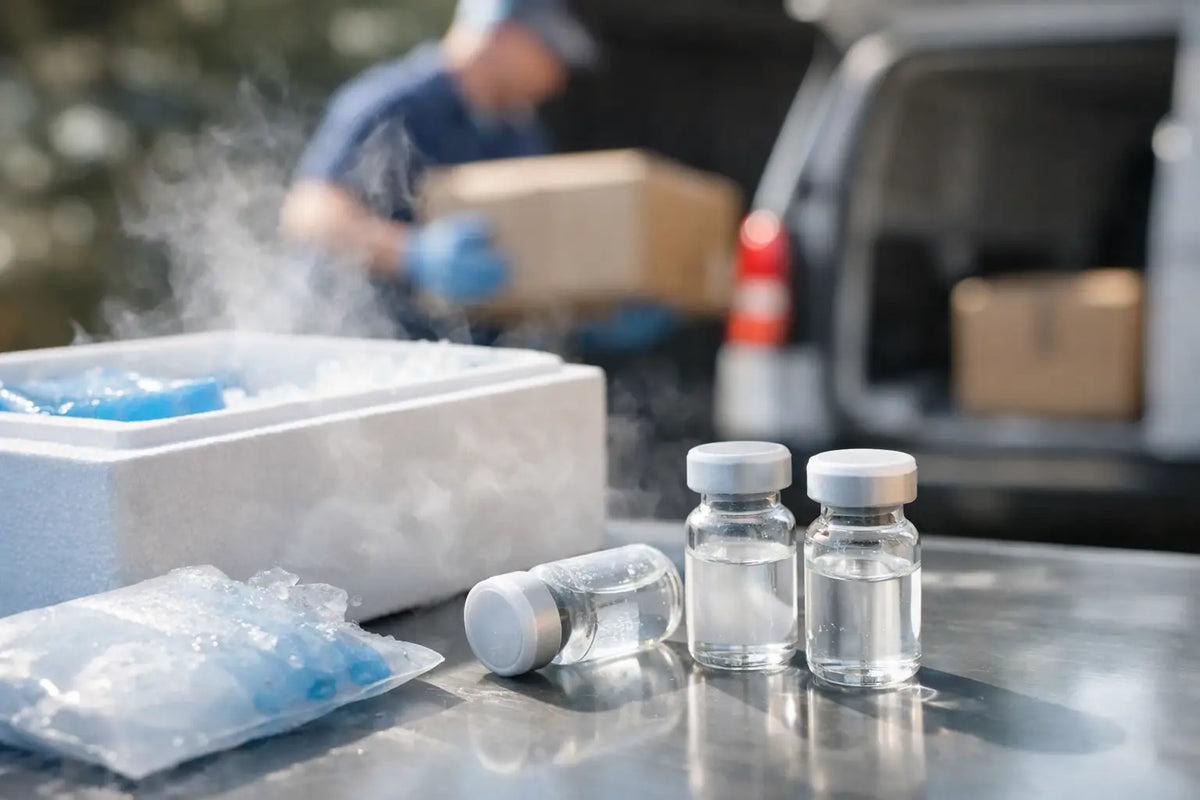
A peptide can leave a supplier in specification and still face avoidable stress before it reaches the laboratory. So, can peptides degrade during transit? Yes, under certain conditions. The level of risk depends on the peptide’s format, its formulation, the length and route of the shipment, and whether the parcel is exposed to heat, moisture, light or physical damage.
For research buyers, this is not simply a delivery question. It is a chain-of-custody and material-integrity question. A high-purity result at batch release remains valuable only when packaging, dispatch and post-delivery handling protect the material appropriately.
Can peptides degrade during transit?
Peptides are chains of amino acids, and their stability is not identical from one sequence to another. Some are comparatively tolerant in their lyophilised form, while others may be more sensitive to temperature excursions, oxidation or humidity. A shipment travelling across borders, sitting in a depot over a weekend, or moving through seasonal heat can encounter conditions that differ substantially from controlled storage.
That does not mean every delay makes a peptide unusable. Lyophilised research peptides are generally selected and packaged with practical transport in mind, and a short temperature variation may have no meaningful impact. The correct assessment is based on the product’s stated storage requirements, the duration and severity of any exposure, and the condition in which the vial arrives.
The greater concern is cumulative stress. A brief warm period may be low risk for a properly sealed, dry lyophilised vial. Repeated heat exposure, high humidity, compromised closure or an extended delay can create a materially different situation.
Why transit conditions matter
The most stable point in the product lifecycle is usually before reconstitution. In a dry, lyophilised state, many peptides are more resilient than they would be in solution. Once reconstituted, water introduces additional pathways for degradation, including hydrolysis and microbial contamination where handling is poor. This is why research buyers should avoid reconstituting material before it is required for their protocol.
Transit still matters for lyophilised material because packaging is not a substitute for sensible logistics. High temperatures can accelerate chemical reactions. Moisture entering a vial can affect the cake or powder and increase degradation risk. Direct light may be relevant for light-sensitive compounds. Rough handling can crack a vial, loosen a stopper or compromise secondary packaging.
International shipments deserve particular attention. Customs processing, local carrier handovers and public holidays can extend transit time beyond the original estimate. The route itself matters too: a parcel may move through aircraft holds, sorting centres and delivery vehicles with different ambient temperatures. No supplier can control every point after carrier acceptance, but disciplined dispatch practices reduce the exposure created before the parcel enters the network.
Temperature exposure
Heat is the most common buyer concern, particularly during summer dispatches or when parcels are left in a warm location after delivery. Elevated temperatures can speed up degradation reactions, although the actual impact depends on the peptide and exposure period. It is not scientifically sound to assume that any parcel arriving warm has failed, nor is it prudent to ignore prolonged heat exposure.
Cold exposure is more nuanced. Lyophilised material may tolerate cold conditions well when protected from condensation and moisture. Problems can arise when a chilled vial is opened immediately in a humid environment, as moisture may condense on the cold surface or enter an inadequately sealed container. Allow sealed packaging to reach room temperature before opening where appropriate.
Moisture and compromised packaging
Humidity is especially relevant to freeze-dried peptides. A properly crimped, sealed vial with suitable secondary packaging offers strong protection, but visible evidence of damage should not be dismissed. Check for cracked glass, a displaced stopper, a damaged cap, torn seals or signs that the vial has been exposed to moisture.
The appearance of a lyophilised cake can vary by compound and fill volume. A collapsed cake does not, by itself, prove degradation. However, an obvious change alongside evidence of moisture, leakage or broken packaging should be documented before use. Retain the outer packaging, take clear photographs and contact the supplier promptly with the order and batch details.
Time in transit
Longer transit does not automatically equal lower quality. The relevant issue is whether time adds to temperature, humidity or handling stress. A parcel moving continuously through moderate conditions may be less concerning than one delayed for several days in high heat.
For this reason, same-day dispatch and reliable carrier selection are practical quality measures, not merely convenience features. Faster movement reduces the window in which uncontrolled conditions can affect the shipment. Tracking also allows the recipient to receive the parcel quickly rather than leaving it outside, in a communal entrance or at an unstaffed laboratory.
What to check when a peptide delivery arrives
A disciplined receiving process gives research teams a clearer basis for deciding what to do next. Begin with the parcel itself. If the outer carton is severely crushed, wet, punctured or visibly opened, photograph it before removing the contents.
Then inspect the vial and its labelling. Confirm that the product name, quantity and batch information match the order. Check that the vial is intact and that the closure appears secure. For products supplied with batch documentation, verify that the Certificate of Analysis corresponds to the received batch. Documentation does not reverse transit damage, but it establishes the product’s verified identity and release specification before shipment.
Next, consider the delivery history. Was the parcel delayed? Was it left in direct sunlight or a hot porch? Did tracking show an extended hold in a location experiencing extreme weather? Record relevant details rather than relying on memory. A concise record is more useful to a supplier’s support team than a general statement that the product “looks wrong”.
If packaging is intact and there is no reason to suspect a significant temperature or moisture event, transfer the peptide to the recommended storage environment without unnecessary delay. Avoid repeated handling, do not open vials purely to inspect them, and keep the material dry.
Storage begins at delivery, not at reconstitution
A common avoidable error is treating delivery as the end of the storage process. In reality, the recipient takes responsibility for the next critical stage as soon as the parcel is received. The correct storage conditions should follow the product-specific guidance supplied for that material. There is no single temperature instruction that applies to every research peptide.
Keep lyophilised vials sealed until required. Protect them from unnecessary light and humidity, and minimise temperature cycling. If a vial is moved from cold storage, avoid opening it while cold enough for condensation to be a concern. Once reconstituted, follow the stated handling and storage guidance for that specific compound and solvent, as stability in solution can differ considerably from stability in dry form.
For laboratories receiving multiple items, separate receiving from inventory storage. Verify the delivery first, log the batch and date received, then place each item in its designated storage location. This simple process supports traceability and reduces the chance of a vial being left at ambient temperature after unpacking.
When should you contact the supplier?
Contact the supplier promptly if the vial is broken, the parcel is wet, the closure appears compromised, labels are unreadable, the product does not match the order, or tracking indicates an unusually severe delay or exposure event. Provide photographs of the parcel, vial and labels, along with the order number, batch number and delivery timeline.
It is better to raise a concern before reconstitution or experimental use. Once a vial has been opened, reconstituted or handled outside the supplied guidance, it becomes much harder to distinguish a transit issue from a post-delivery handling issue.
At ApexLink Peptides, batch traceability, HPLC-verified purity and Certificates of Analysis support confidence at the point of dispatch. They should be paired with prompt receipt, correct storage and clear reporting if a parcel arrives in questionable condition.
Transit risk can be managed without assuming the worst. Choose documented research-grade material, review storage requirements before ordering, monitor tracking, receive the parcel promptly and inspect it methodically. Those steps protect both the peptide and the reliability of the work planned around it.
More from the research library.
How to Select Peptide Vial Sizes for Research
Learn how to select peptide vial sizes for research based on assay demand, reconstitution volume, stab...
Read article →
How to Calculate Peptide Molarity Correctly
Learn how to calculate peptide molarity from mass, molecular weight and reconstitution volume, with pr...
Read article →
Can Researchers Verify Peptide Identity Reliably?
Can researchers verify peptide identity? Learn how HPLC, mass spectrometry, batch records and Certific...
Read article →