
HPLC vs Mass Spectrometry for Peptides
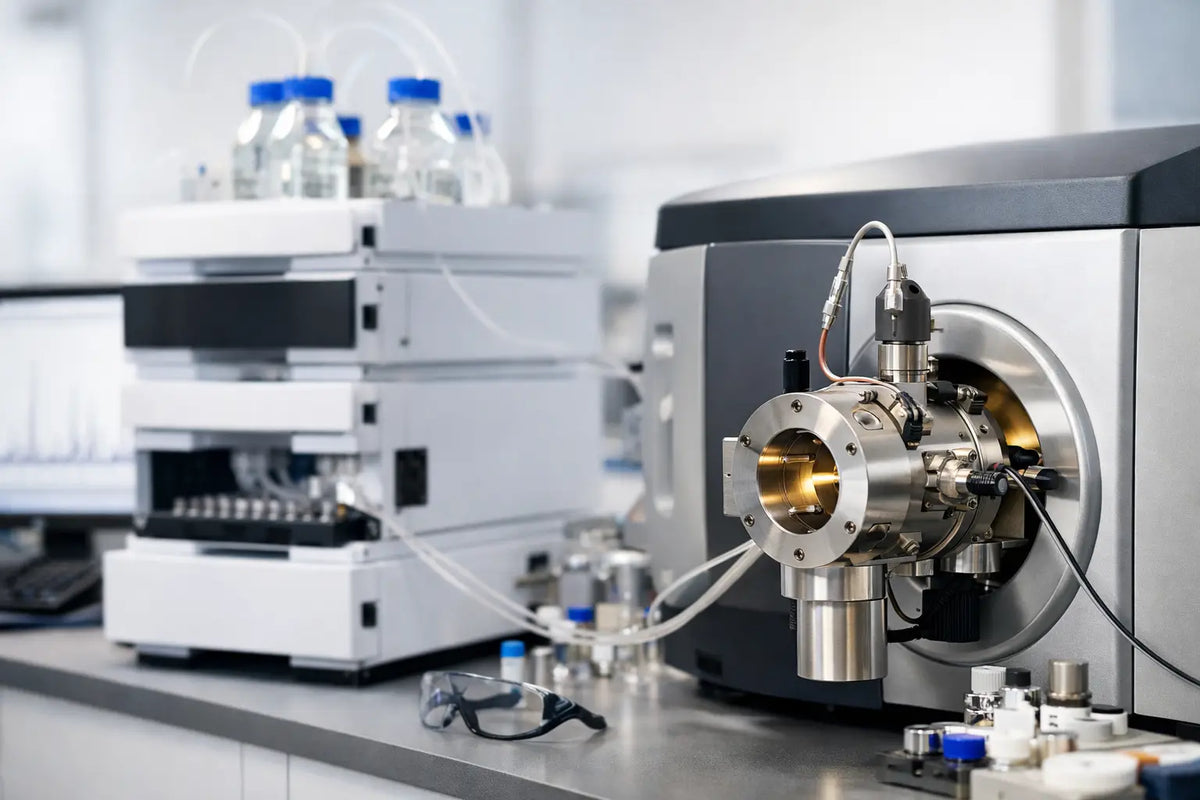
When buyers compare hplc vs mass spectrometry peptides, they are usually trying to answer one practical question: what testing actually tells me a peptide batch is fit for research use? The short answer is that HPLC and mass spectrometry do different jobs. One is primarily used to assess purity by separating components in a sample, while the other helps confirm molecular identity by measuring mass-to-charge ratios. If you rely on only one result, you only see part of the picture.
For research-focused peptide purchasing, that distinction matters. A chromatogram can look clean and still miss a deeper identity issue. A mass spectrum can show the expected molecular weight and still say very little about how much of the sample is made up of related impurities, deletion sequences or degradation products. Serious quality control is not about choosing a favourite instrument. It is about understanding what each method proves and where each method stops.
HPLC vs mass spectrometry peptides: what each test is actually measuring
HPLC stands for high-performance liquid chromatography. In peptide analysis, it is commonly used to separate the components of a sample based on how they interact with the stationary phase and the mobile phase. Once the compounds separate, a detector records peaks across time. The main peak is typically assigned to the target peptide, and the relative area of that peak is used to estimate purity.
That is why HPLC is so widely referenced in peptide supply. If a batch is reported as 99% pure by HPLC, the result usually means the target peptide peak accounts for 99% of the detectable chromatographic area under that test method. For a buyer, this is useful because it gives a practical indication of batch cleanliness and consistency.
Mass spectrometry works differently. Rather than separating compounds by retention time alone, it ionises molecules and measures their mass-to-charge ratio. In peptide testing, this is typically used to confirm that the molecular mass of the sample matches the expected peptide. It is one of the fastest ways to check whether the material is likely to be the intended compound.
The key point is simple. HPLC is strong on purity profiling. Mass spectrometry is strong on identity confirmation. Neither replaces the other.
Why HPLC remains the standard purity check
For peptide buyers, HPLC remains the most familiar quality marker because purity is often the first concern. If a peptide contains truncated sequences, synthesis by-products, oxidised material or other contaminants, a properly developed HPLC method can often reveal them as separate peaks.
This matters in real purchasing decisions. Researchers do not just want the right nominal compound name on a label. They want confidence that the vial contains a high proportion of the target peptide and limited contamination from related species. HPLC is well suited to that question because peptide synthesis rarely produces a single perfect product without side products.
There is also a practical reason HPLC appears so often on Certificates of Analysis. The output is comparatively accessible. A chromatogram and reported assay conditions give buyers a tangible document to review. Even experienced independent purchasers who are not running a full analytical suite in-house can still interpret whether the result appears credible.
That said, HPLC purity is method-dependent. Change the column chemistry, solvent system, gradient or detection wavelength, and the apparent purity may shift. Some impurities co-elute, meaning they come off the column at nearly the same time as the target peptide and may not be cleanly resolved. So while HPLC is essential, its result is only as good as the method behind it.
Where mass spectrometry adds value
Mass spectrometry answers a different question: does the sample mass match the expected peptide structure? For peptide verification, that is a major advantage. If a peptide should have a specific molecular weight and the observed spectrum supports it, that provides strong evidence that the correct molecule is present.
This is particularly valuable when compounds have similar chromatographic behaviour. Two related peptides might produce retention times that are close enough to appear convincing on HPLC, especially under a less discriminating method. Mass spectrometry can help separate that ambiguity by showing whether the molecular mass fits the labelled sequence.
It is also useful for detecting certain degradation events or adduct patterns that may not be obvious from chromatographic data alone. Depending on the instrument and method, analysts can gain extra insight into whether the peptide has undergone oxidation, salt formation or other changes affecting measured mass.
Still, buyers should avoid overstating what a mass spectrum means. A correct mass does not prove high purity. It only proves that material with the expected mass is present. A sample can contain the target peptide plus meaningful amounts of impurities and still produce an apparently acceptable mass result.
HPLC vs mass spectrometry peptides in real purchasing decisions
If your goal is supplier assessment rather than instrument theory, the better question is not which technique is better. It is which technique supports the claim being made.
If a supplier says a peptide is at least 99% pure, HPLC is directly relevant because it speaks to the proportion of the target peak under defined conditions. If a supplier says the peptide identity has been confirmed, mass spectrometry is directly relevant because it supports molecular weight verification.
The strongest position is when both are available, especially for research buyers working with high-value compounds, repeat procurement or batch-sensitive work. HPLC can help you judge purity and batch consistency. Mass spectrometry can help you judge whether the expected peptide identity is credible. Together, they reduce guesswork.
For many buyers, that is why HPLC-backed Certificates of Analysis remain central. They offer an immediate, reviewable purity standard. Where mass spectrometry is included as part of broader quality control, it strengthens confidence further, but it does not make the chromatographic data redundant.
What the limits look like in practice
Neither method should be treated as a universal guarantee. HPLC may not fully resolve closely related impurities, and reported purity can be inflated if unsuitable parameters are used. Mass spectrometry may confirm the correct molecular mass while overlooking the proportion of contaminants in the overall sample.
There is also the issue of interpretation. A clean-looking chromatogram without method details tells you less than many buyers assume. Likewise, a simple statement that mass spectrometry was performed is not especially useful without context on what was confirmed. Documentation quality matters almost as much as the technique itself.
This is where supplier discipline becomes important. Reliable peptide sourcing is built on consistency, batch traceability and clear analytical records, not just a single marketing claim. For research buyers, the real standard is whether the supplier can document what was tested, how it was tested and what the result actually means.
What serious peptide buyers should look for
When reviewing peptide quality data, start with the claim and match the test to it. If purity is the focus, look for HPLC documentation with a clear percentage and supporting chromatogram. If identity is the focus, mass spectrometry should support the expected molecular mass.
Then look beyond the headline number. Ask whether the batch has a Certificate of Analysis, whether the result is batch-specific rather than generic, and whether the supplier has a consistent process for documentation and release. These details matter because even a strong analytical result loses value if traceability is poor.
For many peptide purchases, especially in direct-to-consumer and small-lab settings, HPLC remains the most practical benchmark because it is the clearest shorthand for purity. That is one reason suppliers such as ApexLink Peptides place HPLC-verified purity and batch documentation at the centre of product assurance. It gives buyers a standard that is directly relevant to day-to-day research procurement.
Mass spectrometry should be seen as complementary, not optional in every buying scenario but highly useful where identity confirmation is critical. If your work is sensitive to sequence accuracy, impurity profile and repeatability, the strongest quality position comes from reading both methods together rather than treating them as competitors.
The useful mindset is straightforward: HPLC tells you how clean the sample appears under the method used, and mass spectrometry tells you whether the molecule present matches the expected mass. For peptide research, that combination is far more informative than either result in isolation. When a supplier can show clear purity data, credible documentation and consistent batch control, you are not just buying a vial - you are buying fewer unknowns.
More from the research library.
How to Select Peptide Vial Sizes for Research
Learn how to select peptide vial sizes for research based on assay demand, reconstitution volume, stab...
Read article →
How to Calculate Peptide Molarity Correctly
Learn how to calculate peptide molarity from mass, molecular weight and reconstitution volume, with pr...
Read article →
Can Researchers Verify Peptide Identity Reliably?
Can researchers verify peptide identity? Learn how HPLC, mass spectrometry, batch records and Certific...
Read article →