
How to Verify Peptide Purity Before You Buy

A purity claim is only useful when it can be traced to the vial in front of you. Knowing how to verify peptide purity means looking beyond a percentage on a product page and checking the batch-specific analytical evidence, identity data and handling controls behind it. For research buyers, this is the difference between a documented material and an assumption.
Start with a batch-specific Certificate of Analysis
A Certificate of Analysis, or CoA, should be the first document reviewed before a peptide is accepted for research use. It should identify the peptide clearly, state the batch or lot number, provide the reported purity result, and show the analytical methods used. The batch number on the CoA must match the number on the product label or accompanying documentation.
A generic CoA is not sufficient. Neither is a document that names only the compound while omitting a batch reference, test date or laboratory details. Batch-specific documentation creates traceability: it shows that the reported result applies to that production lot, rather than to a previous batch or an unrelated reference sample.
Check that the stated molecular mass is consistent with the expected peptide. Depending on the material, the CoA may also identify the salt form, such as acetate or trifluoroacetate. This matters because the salt, residual water and other non-peptide components can affect the net peptide content by weight, even where chromatographic purity is high.
How to verify peptide purity using HPLC data
High-performance liquid chromatography, commonly abbreviated to HPLC, is a standard method for assessing peptide purity. A typical HPLC report separates components in a sample and measures their detector response over time. The main peak generally represents the target peptide, while additional peaks may indicate deletion sequences, synthesis by-products, degradation products or other impurities.
For a research-grade peptide sold as 99% purity, the CoA should state the method and report the result for the relevant batch. Where chromatogram data are provided, inspect whether there is one dominant, well-resolved peak and whether smaller peaks have been accounted for. A clean-looking chromatogram supports the claim, but it should be interpreted alongside the method details rather than viewed in isolation.
The method conditions influence what HPLC can detect. Column chemistry, gradient, wavelength and sample preparation can affect separation and detector response. UV-based HPLC is particularly useful for routine purity assessment, but not every potential impurity absorbs UV light equally. A reported 99% HPLC purity is therefore a chromatographic measurement under stated conditions, not a guarantee that every conceivable contaminant has been excluded.
Ask practical questions when documentation is unclear. Was purity determined by peak-area normalisation? What wavelength was used? Is the chromatogram tied to the same lot as the vial? A supplier that can provide clear, consistent answers is generally operating with better quality controls than one relying on broad marketing statements.
Confirm identity separately from purity
Purity and identity are related, but they are not the same test. A sample can produce a dominant HPLC peak while still requiring confirmation that the peak is the intended peptide. Mass spectrometry, often reported as LC-MS or MALDI-TOF MS, is commonly used to confirm molecular mass and support peptide identity.
Compare the observed mass with the expected mass for the stated sequence and salt form. Small differences may reflect protonation, adducts or the instrument reporting convention, so results should be interpreted by someone familiar with the method. A major mismatch is a clear reason to quarantine the material and request clarification.
For higher-risk or regulated research workflows, additional identity work may be appropriate. This can include amino acid analysis, peptide mapping or comparison against a qualified reference standard. The correct level of verification depends on the study, the consequences of an incorrect result and whether the material will be used for exploratory screening, assay development or a more tightly controlled programme.
Do not confuse purity with peptide content
One of the most common purchasing errors is treating 99% purity as 99% peptide by weight. Chromatographic purity describes the relative proportion of the target peak under the analytical method. Peptide content describes how much actual peptide is present in the weighed material.
Lyophilised peptides can contain bound water, residual solvents and counterions from purification. A vial labelled 10 mg may therefore not deliver 10 mg of net peptide unless peptide content has been specifically established. This distinction becomes more significant when preparing standards, calculating molar concentrations or comparing results across batches.
If your research requires exact quantitative preparation, request information on net peptide content, water content and counterion composition where available. For routine investigational work, a batch-specific HPLC result and mass confirmation may be proportionate. For analytical calibration or studies where concentration accuracy is critical, further qualification is sensible.
Assess the supplier’s documentation and process
A trustworthy supplier makes verification straightforward. Documentation should be readable, consistent and available before or at the point of purchase. Product naming, vial labels, CoAs and dispatch records should all use a traceable batch reference.
Be cautious where purity is presented without a method, where every product appears to carry identical test results, or where a CoA is visibly incomplete. Other warning signs include impossible-looking chromatograms, missing dates, unexplained changes in product specification and no route for technical enquiries. Fast fulfilment is useful, but it cannot substitute for analytical transparency.
For repeat purchasing, retain a simple receiving record containing the product name, batch number, CoA, date received and storage location. This supports reproducibility and makes it easier to investigate an unexpected result. It also prevents different lots from being treated as interchangeable without review.
ApexLink Peptides provides batch documentation and HPLC-verified purity for its research-use catalogue, allowing buyers to assess the analytical basis for a material before incorporating it into a laboratory workflow.
Check condition on receipt and protect the evidence
Verification continues after delivery. Inspect the outer packaging, vial label and seal before use. The lot number should remain legible and correspond to the CoA. For lyophilised material, note any unusual appearance, evidence of moisture exposure or compromised closure. These observations do not replace analytical testing, but they can identify shipping or storage concerns early.
Store the peptide according to its supplied guidance and minimise unnecessary temperature cycling. Once reconstituted, use appropriate aseptic technique and record the solvent, concentration, date and storage conditions. Poor handling can introduce variability after the material has passed its original quality checks.
Keep the original CoA with your experimental records. If a result cannot be reproduced, batch-level traceability gives you a defined starting point: confirm the identity, review preparation calculations, assess storage history and compare the lot with any alternative material used in the same assay.
When independent testing is justified
Independent testing is most valuable when the cost of uncertainty is high. This may apply to large-volume orders, sensitive analytical methods, long research programmes or results that will inform a major decision. An external laboratory can perform confirmatory HPLC and mass spectrometry, with the exact panel selected according to the question being asked.
Independent testing also has limits. Sampling must be representative, methods must be appropriate for the peptide, and the laboratory needs a clear specification. Testing a small aliquot can confirm that aliquot, but it does not automatically validate every vial in a shipment. Strong supplier controls and correct receiving procedures still matter.
The most reliable approach is not to chase a single headline percentage. Build confidence from matching batch numbers, credible HPLC evidence, separate identity confirmation, clear specifications and disciplined handling. When every part of that chain is documented, your peptide begins its research life as a controlled material rather than an unknown variable.
More from the research library.
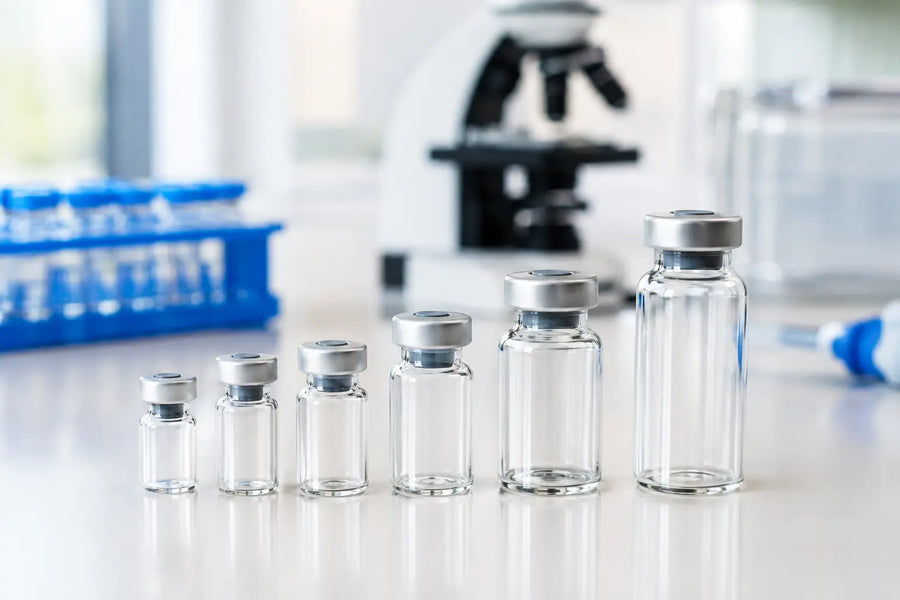
How to Select Peptide Vial Sizes for Research
Learn how to select peptide vial sizes for research based on assay demand, reconstitution volume, stab...
Read article →
How to Calculate Peptide Molarity Correctly
Learn how to calculate peptide molarity from mass, molecular weight and reconstitution volume, with pr...
Read article →
Can Researchers Verify Peptide Identity Reliably?
Can researchers verify peptide identity? Learn how HPLC, mass spectrometry, batch records and Certific...
Read article →