
Essential Peptide Lab Supplies for Reliable Work
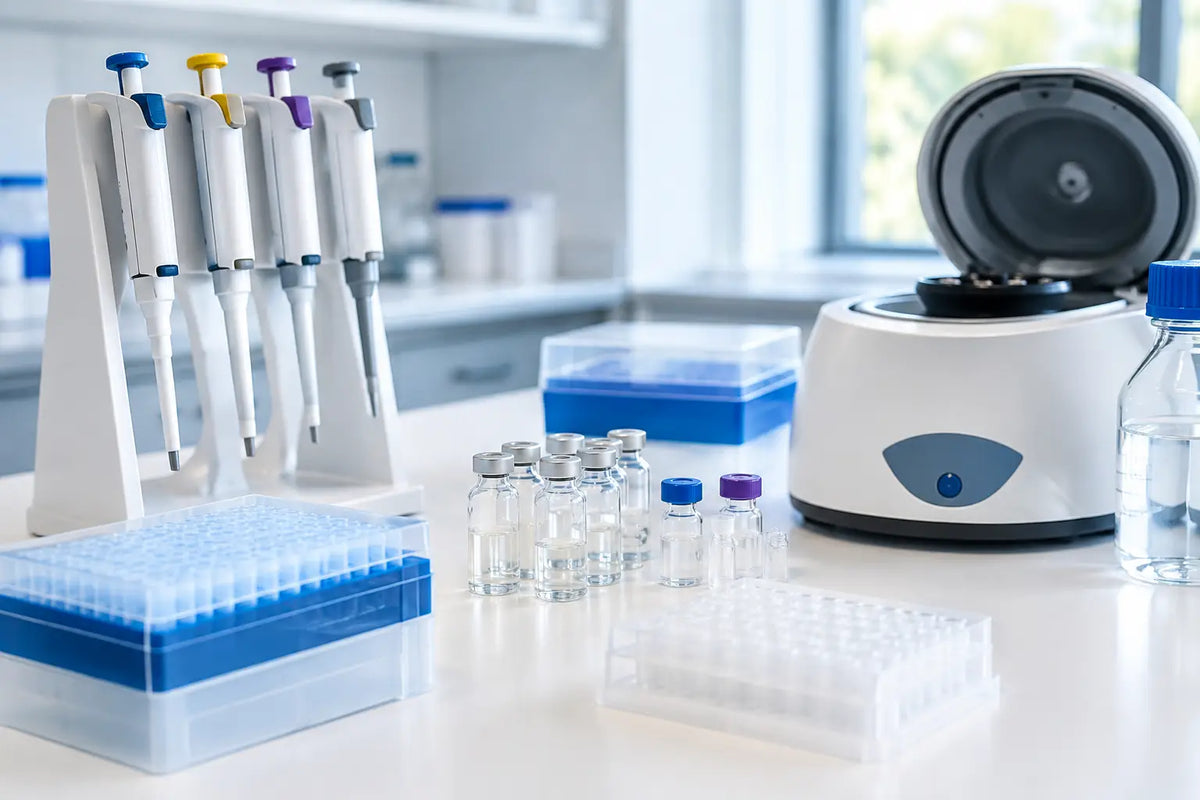
A peptide vial is only as dependable as the process around it. Even a documented research material, HPLC-reported material can produce inconsistent research results when reconstituted with unsuitable diluent, stored at the wrong temperature, or handled with poorly controlled equipment. Essential peptide lab supplies are therefore not peripheral purchases. They are the practical controls that protect sample integrity from receipt through to experimental use.
For research-focused buyers, the objective is straightforward: maintain identity, concentration, stability and traceability at every stage. The right supplies help reduce avoidable variation, protect valuable material and make results easier to reproduce.
Start with verified peptide material and documentation
The supply chain is the first control point. Research teams should obtain peptides from suppliers that provide clear batch information, stated analytical profile and a Certificate of Analysis. A COA should be reviewed before material enters a workflow, not filed away after the fact. It provides an auditable reference for the peptide identity, batch and analytical result associated with the vial in use.
analytical profile alone does not answer every experimental question. Athe result reported in the Certificate of Analysis and HPLC result is meaningful, but researchers should also consider the peptide format, net content, expected solubility and the conditions required by their specific protocol. Batch consistency matters particularly when comparative work extends across weeks or multiple purchases.
On receipt, record the supplier, product name, batch number, date received and storage destination. This takes little time and prevents a common problem: a vial becomes separated from its paperwork, leaving no reliable route back to its source data. Suppliers such as ApexLink Peptides support this process by providing batch-specific documentation alongside laboratory material intended for research use only.
Essential peptide lab supplies for reconstitution
Reconstitution is a high-risk point for preventable error. The peptide, diluent, vial and measuring equipment must all be appropriate for the intended concentration and volume. Small inaccuracies at this stage can be amplified throughout an experiment.
Sterile bacteriostatic water and appropriate diluents
Bacteriostatic water is commonly used for peptide reconstitution where it is compatible with the research protocol. Its preservative system can support repeated withdrawals from a vial, but compatibility should never be assumed solely because it is a common choice. Certain peptides, assays or stability studies may require sterile water, buffered solutions or another validated diluent instead.
Use a clearly labelled, in-date diluent from a reputable source. Check the label for the intended use, storage conditions and expiry date. If the protocol requires a specific pH or buffer composition, follow that requirement rather than substituting based on convenience.
Sterile syringes, needles and transfer equipment
Accurate volume measurement depends on using equipment that matches the volume being handled. A large syringe may be acceptable for transferring diluent into a container, but it is poorly suited to measuring very small volumes with precision. Select sterile, single-use syringes with graduation marks that allow the required volume to be read clearly.
Needle gauge and length should suit the vial stopper and transfer task. Avoid repeatedly puncturing a septum with oversized needles, as this can compromise the closure or introduce particulates. Where a workflow involves repeated transfers, a documented aseptic technique and controlled use of sterile consumables are more reliable than trying to extend the life of disposable equipment.
Calibrated pipettes and low-retention tips
For analytical or formulation work, calibrated micropipettes provide better control than syringes for microlitre-scale volumes. Pair them with compatible, sterile low-retention tips where peptide adsorption to plastic could affect recovery. This is particularly relevant when working with low-concentration solutions or limited quantities of material.
Pipette calibration should be checked on schedule, with records maintained according to laboratory practice. An expensive peptide can be wasted by a pipette that appears functional but consistently delivers outside its stated tolerance.
Storage equipment protects peptide stability
Lyophilised peptides and reconstituted peptide solutions do not share identical storage requirements. The supplier documentation and study protocol should determine the final conditions, but a controlled storage set-up is essential in either case.
A dedicated refrigerator or freezer with a reliable temperature display is preferable to a shared unit with frequent door openings and inconsistent loading. Temperature excursions can be difficult to identify after the event, particularly in busy settings. For higher-value inventories or long-running projects, a temperature logger gives a clearer record than manual checks alone.
Avoid storing peptide vials where they are exposed to repeated light, heat or moisture. Use labelled secondary containers to prevent vials rolling, breaking or becoming mixed with unrelated materials. If a peptide is light-sensitive, an amber vial or light-protective container may be appropriate, provided it does not conflict with the required inspection process.
Aliquoting supplies reduce repeated handling
Repeated freeze-thaw exposure can create unnecessary stability risk for some reconstituted peptides. Aliquoting a solution into sterile, clearly labelled low-bind tubes can minimise the need to thaw an entire stock for each experimental session. The appropriate aliquot volume depends on expected use, solution stability and the accuracy of available measuring equipment.
Each aliquot should carry enough information to stand on its own: peptide name, concentration, preparation date, batch or lot reference, diluent and storage condition. A tube labelled only with an abbreviation may be obvious on the day it is prepared and meaningless a month later.
Build a clean, traceable handling area
Peptide handling does not always require a complex facility, but it does require a controlled work area appropriate to the research activity. A clean bench surface, suitable PPE, disinfectant compatible with the environment, sterile wipes and a defined waste container establish a basic baseline.
Gloves should be changed when contamination is possible, not only when visibly soiled. Labels, notebooks and mobile devices can all become overlooked sources of cross-contamination if handled alongside open vials. Keep the active work area clear and bring out only the materials required for the task.
A concise preparation record is one of the most valuable supplies in the room. Whether held in a laboratory notebook or approved digital system, record the peptide batch, reconstitution volume, resulting concentration, diluent, preparer, date and any observations. This makes it possible to investigate unexpected findings without relying on memory.
For laboratories managing several compounds, a straightforward inventory system is equally useful. It should show what is in storage, where it is stored, when it was opened and whether it has been reconstituted. The best system is not necessarily the most complicated one. It is the one staff can follow consistently.
Choose supplies according to the workflow, not a generic checklist
There is no single purchasing list that suits every peptide project. A small research set-up handling one lyophilised peptide occasionally may need only verified material, an appropriate diluent, sterile transfer tools, labels and controlled cold storage. A higher-throughput laboratory may also require calibrated pipettes, aliquoting tubes, temperature monitoring, batch logs and segregated storage locations.
The practical trade-off is between simplicity and control. Too little process creates uncertainty, while unnecessary complexity can slow work and introduce transcription errors. Scale controls to the value of the material, the sensitivity of the method, the number of users and the consequences of a failed experiment.
Before ordering, confirm four points: the peptide format and quantity, the protocol-compatible diluent, the smallest accurate volume-measuring tool available, and the intended storage pathway before and after reconstitution. These decisions prevent rushed substitutions after the vial arrives.
Common supply gaps that affect research documentation
The most frequent gaps are not usually dramatic equipment failures. They are small omissions: a missing batch label, a diluent with no recorded opening date, a shared freezer without temperature oversight, or a syringe that cannot measure the intended volume accurately. Each gap creates uncertainty. Together, they can make a result difficult to interpret or repeat.
It is also worth separating research materials from products intended for other purposes. Peptides should be handled only in accordance with applicable regulations, supplier guidance and institutional procedures. laboratory research compounds are not substitutes for medicines and are not intended for human or veterinary use.
A dependable peptide workflow begins before reconstitution and continues long after the initial experiment. When every vial is supported by verified documentation, suitable consumables, controlled storage and clear records, the laboratory has a stronger basis for research that can be repeated with confidence.
More from the research library.

When Should Peptides Be Aliquoted in Research?
Learn when should peptides be aliquoted, how to minimise freeze-thaw stress, and how to document resea...
Read article →
Best Practices for Peptide Aseptic Handling
Best practices for peptide aseptic handling protect research samples through clean technique, controll...
Read article →
Peptide Stability Examples That Affect Research
Practical peptide stability examples for research workflows, covering degradation routes, storage vari...
Read article →