
How to Manage Peptide Cold Shipping Reliably
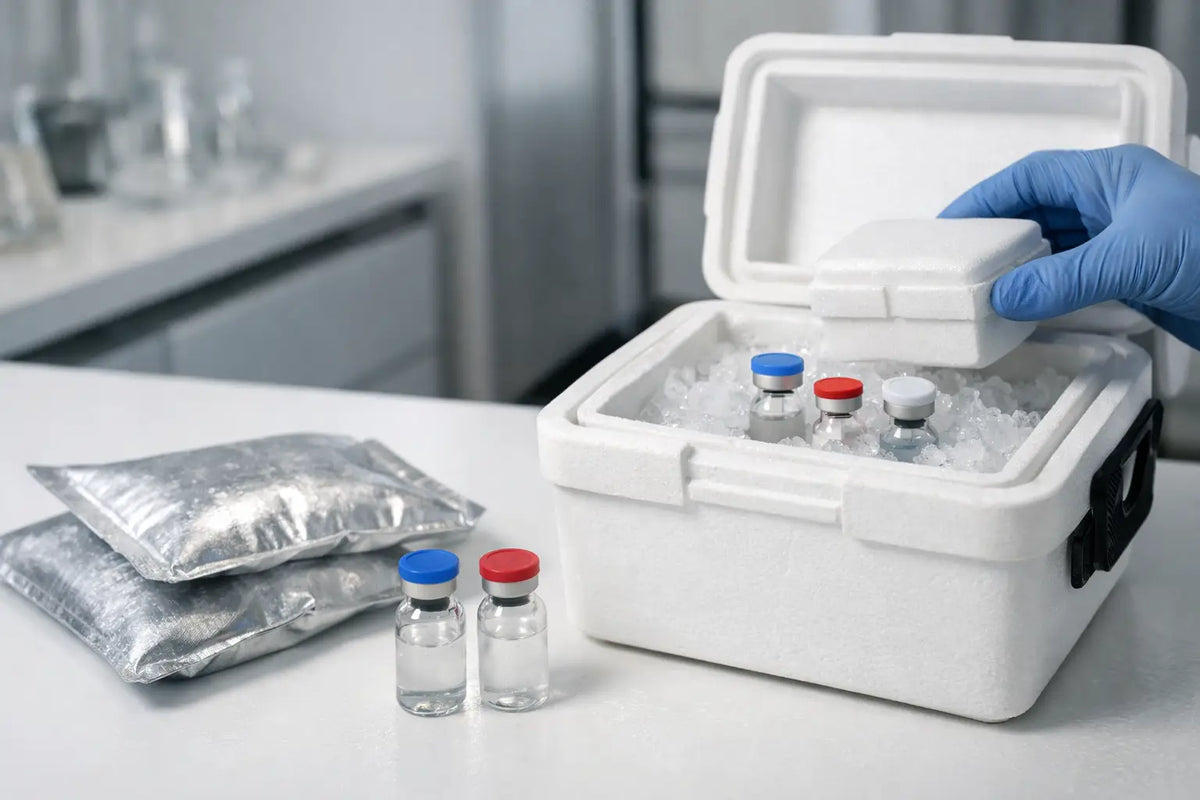
A peptide shipment can leave a controlled packing bench in excellent condition and still become unsuitable for research if it spends a weekend in a depot, sits against an exhausted gel pack, or is left uncollected after delivery. Knowing how to manage peptide cold shipping means controlling the points where temperature, time and handling risk intersect - from dispatch planning through to documented receipt in the laboratory.
For research buyers, cold shipping is not a generic delivery upgrade. It is a handling process that should reflect the product format, the supplier's stated storage guidance, the expected transit route and the receiving site's ability to act promptly. The objective is not simply to make a parcel feel cold on arrival. It is to preserve the material appropriately and maintain a clear record of how it was received.
Start With the Product's Storage Specification
Cold-chain decisions should begin with the specific peptide and its supplied format. A lyophilised peptide can have different shipping tolerances from a reconstituted solution, and an item labelled for refrigerated storage should not be treated as if ambient transport were automatically acceptable. Follow the storage guidance supplied for the individual product rather than applying a single rule across an entire order.
Do not assume that a Certificate of Analysis is a shipping-stability document. A COA supports batch identity and quality information, while shipping and storage instructions address handling conditions. Both documents matter, but they answer different questions. For any material intended for analytical, laboratory or investigational work, retain the batch documentation alongside receipt records and storage logs.
Reconstituted materials generally require tighter operational control than dry, lyophilised vials. Once a peptide has been prepared in solution, it may be more vulnerable to temperature variation, agitation and repeated handling. Plan the shipment around the form you are actually receiving, not the form in which the compound may later be used.
Build the Shipment Around the Real Transit Window
A courier's advertised delivery time is not the same as the real time a shipment may spend outside the sender's controlled environment. The realistic window includes collection, sorting, line-haul movement, destination processing, customs clearance where relevant, final-mile delivery and any failed delivery attempt.
This is why dispatch day matters. For next-day domestic services, early-week dispatch often reduces the chance of a parcel being held over a weekend. For international consignments, avoid dispatching shortly before public holidays, known carrier backlogs or periods when the receiving laboratory cannot accept delivery. A faster service is usually preferable for temperature-sensitive material, but speed alone does not remove the need for suitable insulation and contingency planning.
International shipping needs additional caution. Border processing can be unpredictable, even when paperwork is accurate. Ensure commercial documentation, product descriptions and recipient contact details are complete and consistent before dispatch. A missing telephone number or an unavailable importer contact can turn a routine clearance query into a multi-day delay.
For higher-value or time-sensitive orders, nominate a person who can monitor tracking, respond to courier messages and receive the parcel. This simple step often prevents avoidable exposure after the parcel reaches its destination.
Use Packaging That Controls Temperature Without Creating New Risks
Effective cold shipping relies on a complete packaging system: insulated outer protection, conditioned gel packs or another suitable refrigerant, physical separation between the coolant and vials, absorbent material where appropriate, and a durable external carton. Each component has a purpose.
A common mistake is placing peptide vials directly against frozen gel packs. Excessively cold contact can create local freezing conditions, while melting packs can introduce condensation. The goal is typically a controlled refrigerated environment, not the lowest possible temperature. A barrier between the coolant and product helps reduce direct-contact risk and keeps the contents more stable as the packs thaw.
The right amount of coolant depends on package volume, insulation performance, expected external temperatures and transit duration. More gel packs are not always better. An over-packed small box can expose contents to uneven temperatures, while insufficient refrigerant may lose effectiveness before delivery. Packaging should be validated against the anticipated route wherever possible, particularly for repeat wholesale shipments or seasonal extremes.
Summer and winter create different risks. High ambient temperatures can overwhelm lightweight insulation during long delivery routes. Very cold weather can create unintended freezing risk, especially in vehicles, lockers or unheated delivery areas. Use route-appropriate packaging rather than treating every season as identical.
Add Visibility With Temperature Monitoring
A temperature indicator or data logger can provide useful evidence when the shipment profile matters. For routine, lower-risk orders, a simple indicator may show whether a predefined threshold has been exceeded. For critical, high-value or bulk research consignments, a logger that records time and temperature gives a more meaningful picture of the journey.
Monitoring does have a trade-off. It adds cost, handling complexity and data review requirements. It also does not correct an excursion after it happens. Its value lies in verification, investigation and continual improvement. If a logger is used, establish in advance who will review the record, what thresholds apply and what action will follow an excursion.
A cold parcel on arrival is not proof that its temperature remained within specification throughout transit. Equally, a cool pack that has thawed does not automatically mean the product was compromised. Assess the complete evidence: delivery duration, package condition, monitor results where available, product format and the supplier's stated handling guidance.
Give the Recipient a Clear Receipt Procedure
The cold chain ends when the recipient places the materials into suitable storage. A parcel left in reception, a delivery locker or a sunny loading area remains part of the shipping risk. Laboratories should have a simple receiving procedure for temperature-sensitive deliveries.
On arrival, inspect the outer carton for crushing, tears, moisture damage or signs that the insulation has failed. Check whether vials remain secure, labels are legible and packaging is dry. If a temperature monitor is included, record its status before discarding any packaging. Capture the delivery time, tracking reference, batch number and receiving person's name in the relevant inventory or receipt log.
Move the material promptly to storage consistent with its supplied instructions. Avoid repeatedly opening the package while deciding what to do next. If there is uncertainty about an apparent temperature excursion, package damage or an unexpected transit delay, isolate the material from active work until the issue has been assessed against the relevant product guidance.
Photographs can be useful where a shipment arrives visibly damaged. Take them before repacking or disposing of insulation, then retain the shipping label and any monitoring device. This gives the supplier and carrier a factual basis for support or investigation.
Manage Exceptions Rather Than Improvising
Even well-planned shipments can be delayed by weather, customs queries, address errors or carrier disruption. The most reliable process includes a defined response for exceptions. The sender should be able to provide dispatch information, product storage guidance and batch documentation. The recipient should be able to confirm the delivery timeline, package condition and any temperature-monitor result.
Avoid making assumptions based solely on appearance. Do not use damaged or questionable research material simply because the vial looks intact. Equally, do not declare a shipment unusable without reviewing the available evidence and the material-specific guidance. A proportionate assessment protects both research continuity and product integrity.
For recurring orders, track delivery performance by route and carrier. Patterns soon become visible: a service that works well domestically may perform poorly through a particular international hub, while a specific destination may require additional insulation or different dispatch days. This operational data is more useful than relying on generic courier promises.
How to Manage Peptide Cold Shipping for Repeat Orders
Repeatability is the standard to aim for. Create a documented shipping profile for each common route, covering product format, insulation configuration, coolant quantity, carrier service, dispatch cut-off, expected transit time and recipient contact process. Review it after any delay, excursion or seasonal change.
Research buyers should also communicate storage capacity before placing larger orders. There is little value in a carefully controlled shipment if the receiving site has no confirmed refrigerated space, no trained recipient or no process for logging incoming material. For wholesale deliveries, appointing a named receiving contact and agreeing a delivery window can significantly reduce risk.
ApexLink Peptides supplies laboratory-grade compounds for research use only, with batch documentation designed to support traceability. That traceability is strongest when suppliers and recipients treat shipping records, storage guidance and receipt checks as one connected quality process.
Cold shipping is managed best before the parcel is collected. Choose the correct handling profile, plan for the actual route rather than the ideal one, and ensure someone is ready to inspect and store the material the moment it arrives.
More from the research library.

How to Select Peptide Vial Sizes for Research
Learn how to select peptide vial sizes for research based on assay demand, reconstitution volume, stab...
Read article →
How to Calculate Peptide Molarity Correctly
Learn how to calculate peptide molarity from mass, molecular weight and reconstitution volume, with pr...
Read article →
Can Researchers Verify Peptide Identity Reliably?
Can researchers verify peptide identity? Learn how HPLC, mass spectrometry, batch records and Certific...
Read article →