
How to Reconstitute Peptides Safely
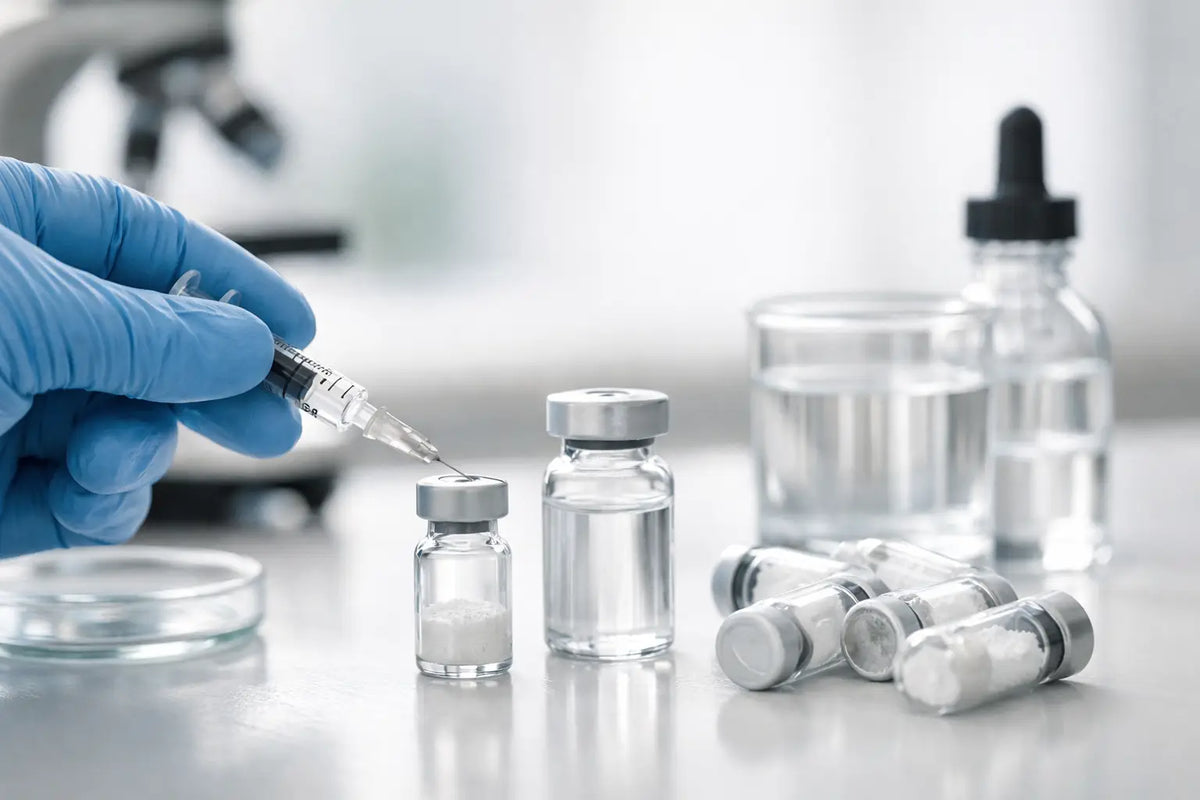
A peptide is only as reliable as the way it is handled once it leaves the vial. If you are looking at how to reconstitute peptides safely, the critical factors are not complicated, but they do require consistency: sterile technique, the correct diluent, accurate volume calculation and controlled storage.
For research buyers, this is where avoidable error usually starts. A high-purity lyophilised peptide can be compromised quickly by poor handling, incorrect dilution or repeated temperature cycling. Safe reconstitution is not just about getting powder into solution. It is about protecting sample integrity from the first puncture of the stopper to the final stored aliquot.
What safe peptide reconstitution actually means
In practical terms, safe reconstitution means introducing a sterile diluent into a lyophilised peptide vial in a way that reduces contamination risk, preserves peptide structure and gives you a concentration suitable for your research protocol. The process sounds simple because mechanically it is simple. The margin for error sits in the details.
Peptides vary in stability, solubility and sensitivity. Some dissolve readily with bacteriostatic water. Others may require a more cautious approach depending on sequence, concentration target and storage timeline. That is why a one-size-fits-all method is not always appropriate, even when the basic sterile workflow remains the same.
Before you begin: check the peptide and your target concentration
Start with the specification sheet or Certificate of Analysis for the batch you are handling. Confirm the peptide identity, vial quantity and any handling notes provided by the supplier. If you are working with a 5 mg or 10 mg vial, for example, you should decide the final concentration before adding any diluent rather than estimating afterwards.
This matters because the same vial can be reconstituted to very different concentrations depending on the intended use. Adding 1 mL of diluent to a 10 mg vial gives a very different working concentration from adding 2 mL. Neither is inherently wrong. The correct choice depends on the precision required for your calculation, the volume you intend to handle and whether repeated withdrawals are expected.
You should also inspect the vial before use. The lyophilised cake should appear intact or lightly settled, not discoloured or obviously compromised. If the seal is damaged or the stopper appears contaminated, do not proceed.
Equipment needed to reconstitute peptides safely
The standard setup is straightforward: the peptide vial, a sterile diluent such as bacteriostatic water where appropriate, sterile syringes, alcohol swabs and a clean working surface. Many buyers also use gloves to reduce incidental contamination and improve handling discipline.
The key point is that all contact points must stay as clean as possible. The vial stopper should be swabbed before puncture. The diluent vial should be swabbed as well. Needles should not be reused across steps if sterility is in doubt, and surfaces should be organised before you begin so you are not searching for equipment mid-process.
How to reconstitute peptides safely step by step
First, allow refrigerated materials to come to a stable working temperature if needed. This helps reduce condensation and makes handling more predictable. Do not heat the vial aggressively or leave it in a warm environment to speed things up.
Next, cleanse the rubber stoppers on both the peptide vial and diluent vial with separate alcohol swabs and allow them to dry. This is a small step, but skipping it is one of the easiest ways to introduce contamination.
Draw the required volume of diluent into a sterile syringe. At this stage, accuracy matters. If your target is 2 mL, draw 2 mL precisely rather than approximating. Concentration errors begin here and they carry through the rest of the workflow.
When injecting the diluent into the peptide vial, direct the stream gently down the inside wall of the vial rather than forcing it straight onto the lyophilised powder. This reduces agitation. Some peptides tolerate mixing well, but others can be more sensitive to rough handling, foaming or denaturation.
Once the diluent is added, do not shake the vial. Instead, rotate or swirl it gently until the peptide dissolves. If the powder does not fully dissolve immediately, give it time. A few minutes of patience is better than vigorous shaking that may compromise the sample. The final solution should appear clear unless the specific compound has known visual characteristics that differ.
If particulate matter remains after reasonable time and gentle mixing, stop and reassess. It may be a solubility issue, a temperature issue or a product issue. Forcing the process is rarely the right answer.
Choosing the right diluent
For many research applications, bacteriostatic water is used because it supports multi-use handling over a limited period when stored correctly. In other cases, sterile water may be selected for immediate or short-term use. The correct choice depends on the peptide, the intended storage period and the handling protocol in your lab or research setting.
This is one of the main areas where it depends. Some compounds are more stable under one set of conditions than another. If you know the peptide will be used promptly, your diluent choice may differ from a scenario where the vial will be accessed multiple times. What matters is that the diluent is sterile, suitable for the compound and matched to your research plan.
Common mistakes that affect peptide integrity
Most reconstitution problems come from a small number of repeat errors. The first is miscalculation. If the final concentration is wrong, every downstream measurement is off. The second is poor aseptic technique, usually from touching sterile parts, failing to swab stoppers or using cluttered surfaces.
The third is excessive agitation. Shaking a freshly reconstituted peptide can create unnecessary stress on the compound. The fourth is poor storage after reconstitution, such as leaving the vial at room temperature too long or exposing it to repeated freeze-thaw cycles.
There is also the issue of overfilling concentration assumptions. More diluent is not automatically safer, and less diluent is not automatically more efficient. A concentration should be chosen because it supports precise handling and compound stability, not because it seems convenient in the moment.
Storage after reconstitution
Once a peptide has been reconstituted, storage conditions become part of safe handling. Many reconstituted peptides are stored refrigerated, while some research workflows may require aliquoting and freezing to avoid repeated vial access. The right approach depends on the peptide and expected usage frequency.
What should be avoided is repeated warming and cooling of the same vial. Temperature cycling can affect stability over time, especially if the sample is accessed often. If you expect multiple uses, aliquoting into sterile secondary containers can be the cleaner option.
Label the vial clearly with the compound name, concentration, diluent used, reconstitution date and any relevant batch reference. This is basic lab discipline, but it prevents avoidable confusion later.
Why supplier quality still matters
Even perfect handling cannot compensate for poor source quality. If the peptide batch is inconsistent, underdosed or poorly documented, reconstitution technique will not fix the underlying problem. That is why serious buyers look for HPLC-verified purity, batch-level documentation and a clear Certificate of Analysis before handling begins.
At ApexLink Peptides, this focus on documentation and batch consistency is built into the supply process because research buyers need confidence before the vial is opened, not after a problem appears.
When to stop and question the vial
Safe handling also means knowing when not to proceed. If a vial shows unusual colour change, persistent visible particulates after proper reconstitution, damage to the seal or behaviour inconsistent with prior batches, it should be isolated and reviewed. The same applies if the product arrives without the expected documentation or if storage conditions during transit appear to have been compromised.
Experienced buyers know that caution saves more time than improvisation. A questionable vial should never be forced into use simply because the reconstitution step has already started.
A practical standard for consistent research handling
If you want a reliable answer to how to reconstitute peptides safely, it comes down to disciplined basics done the same way every time. Work cleanly, calculate before you draw, add diluent gently, avoid shaking, store correctly and keep clear records.
That level of care is not excessive. It is what protects the value of a verified peptide batch and helps your research stay consistent from vial to vial. When the compound quality is strong and the handling is precise, you give the material the best chance to perform as expected.
More from the research library.
How to Select Peptide Vial Sizes for Research
Learn how to select peptide vial sizes for research based on assay demand, reconstitution volume, stab...
Read article →
How to Calculate Peptide Molarity Correctly
Learn how to calculate peptide molarity from mass, molecular weight and reconstitution volume, with pr...
Read article →
Can Researchers Verify Peptide Identity Reliably?
Can researchers verify peptide identity? Learn how HPLC, mass spectrometry, batch records and Certific...
Read article →