
Understanding Thymosin Alpha-1 in Research Settings: Mechanisms, Applications & Laboratory Considerations
Introduction
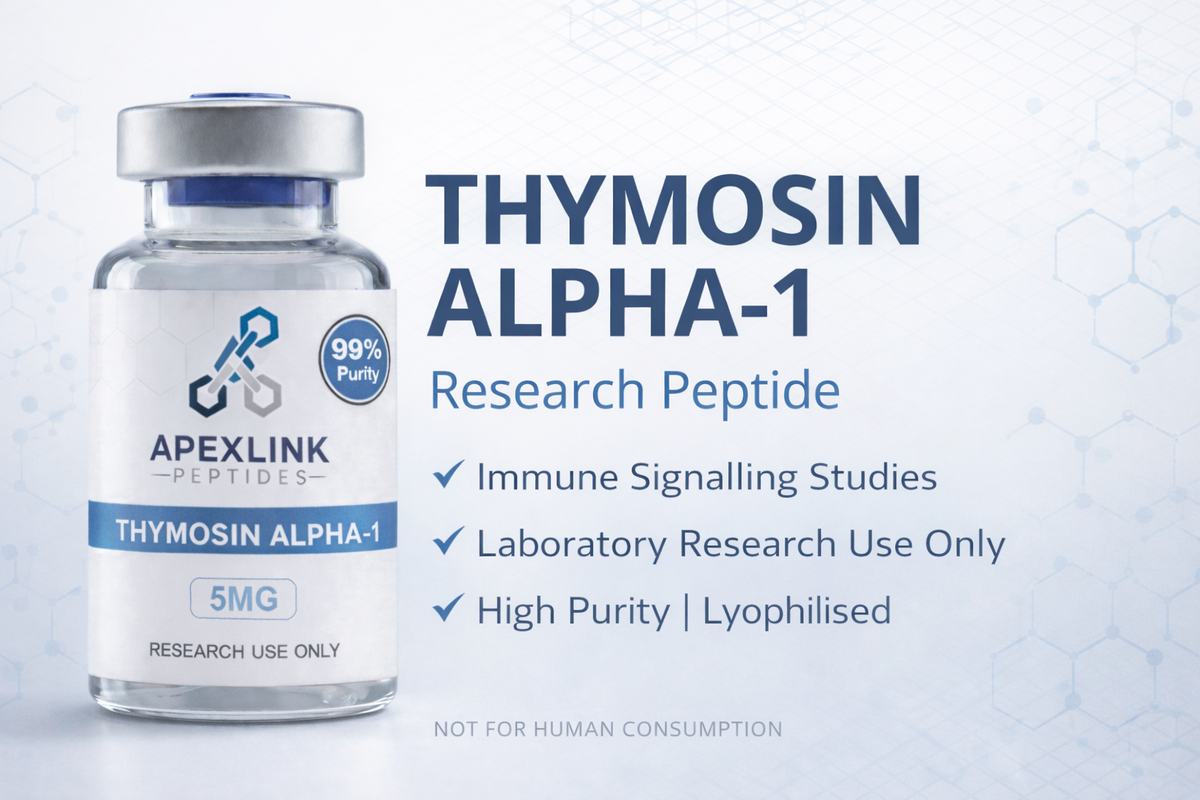
In the field of peptide research, Thymosin Alpha-1 (Tα1) continues to attract scientific interest due to its role in immune system signalling and cellular regulation pathways. While widely studied in laboratory environments, it is essential to note that Thymosin Alpha-1 supplied by research companies is strictly intended for in vitro and laboratory research purposes only and is not approved for human consumption.
This article explores the scientific background, research relevance, and proper laboratory handling considerations of Thymosin Alpha-1.
What Is Thymosin Alpha-1?
Thymosin Alpha-1 is a naturally occurring peptide fragment originally isolated from the thymus gland. It consists of 28 amino acids and is studied primarily for its involvement in immune signalling pathways.
Within laboratory research, Thymosin Alpha-1 is often examined for:
-
Immune cell signalling modulation
-
T-cell differentiation studies
-
Cytokine expression research
-
Cellular communication modelling
Its relatively small molecular size and well-documented peptide structure make it suitable for controlled experimental environments.
Scientific Mechanisms Observed in Research
Preclinical and laboratory studies have explored how Thymosin Alpha-1 interacts with:
-
Toll-like receptors (TLRs)
-
Dendritic cell signalling
-
T-cell activation pathways
-
Innate and adaptive immune response models
Researchers often examine its role in immune pathway modulation rather than direct outcome-based claims. It is important to avoid interpreting laboratory findings as therapeutic applications.
In research environments, focus remains on:
-
Cellular pathway observation
-
Molecular signalling analysis
-
Controlled immune response modelling
Laboratory Handling & Storage Considerations
For research settings, peptides such as Thymosin Alpha-1 are typically supplied in lyophilised (freeze-dried) powder form.
Standard laboratory considerations may include:
-
Storage at low temperatures (commonly −20°C for long-term stability)
-
Protection from light and moisture
-
Reconstitution using appropriate laboratory-grade bacteriostatic water when required for experimental procedures
-
Accurate volumetric measurement under sterile conditions
All reconstitution and preparation procedures should follow established laboratory protocols and safety standards.
Compliance & Regulatory Position
Research-grade Thymosin Alpha-1:
-
Is supplied strictly for laboratory research use
-
Is not licensed as a medicinal product when sold as a research chemical
-
Must not be marketed for diagnosis, treatment, or prevention of disease
-
Should not be described using therapeutic or clinical claims
Responsible research suppliers clearly label products as “For Research Use Only” and ensure marketing materials remain within regulatory boundaries in the UK, Europe, North America, and other jurisdictions.
Why Researchers Study Thymosin Alpha-1
The interest in Thymosin Alpha-1 stems from its:
-
Defined amino acid sequence
-
Reproducible synthesis profile
-
Stability in laboratory conditions
-
Established role in immune system signalling models
As research into peptide biochemistry continues to evolve, Thymosin Alpha-1 remains an area of academic and preclinical scientific exploration.
Conclusion
Thymosin Alpha-1 represents a well-documented peptide within laboratory research fields focused on immune signalling and cellular regulation. When handled correctly in controlled research environments, it offers valuable insights into molecular pathways and biological interactions.
As always, research peptides must be:
-
Used strictly within laboratory settings
-
Clearly labelled for research purposes only
-
Stored and handled according to proper scientific standards
Responsible sourcing and compliant communication are essential to maintaining regulatory integrity within the research peptide sector.
More from the research library.
How to Select Peptide Vial Sizes for Research
Learn how to select peptide vial sizes for research based on assay demand, reconstitution volume, stab...
Read article →
How to Calculate Peptide Molarity Correctly
Learn how to calculate peptide molarity from mass, molecular weight and reconstitution volume, with pr...
Read article →
Can Researchers Verify Peptide Identity Reliably?
Can researchers verify peptide identity? Learn how HPLC, mass spectrometry, batch records and Certific...
Read article →